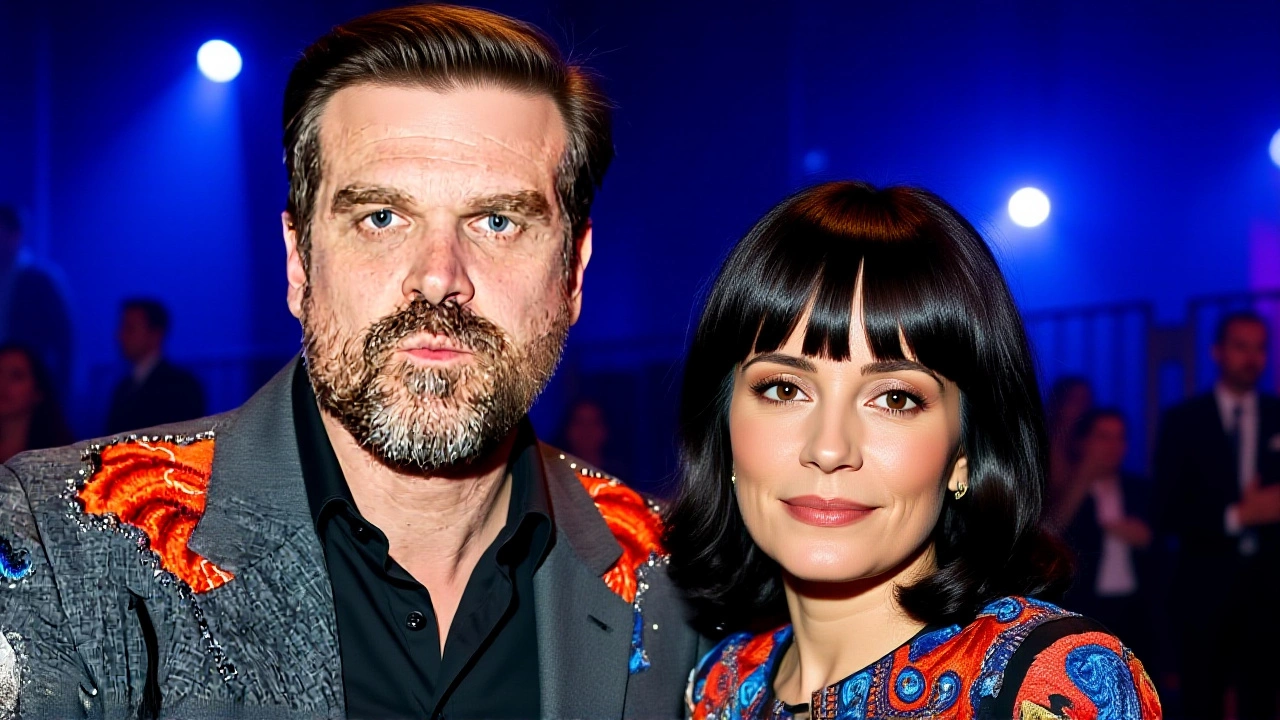
The final season of Stranger Things didn’t just premiere—it imploded. When Stranger Things Season Five dropped on Netflix in November 2025, fans weren’t greeted with nostalgic thrills or supernatural twists. Instead, they were met with a storm of personal scandals, political missteps, and behind-the-scenes turmoil that turned what should have been a celebration into a public reckoning. The show’s final chapter felt less like a finale and more like a slow-motion collapse, with its central actors caught in a web of controversy that no script could have written.
The Harbour-Allen Fallout: A Breakup That Went Viral
It started with music. In October 2025, British singer-songwriter Lily Allen, 40, released her album Goodbye, Jim, a raw, unflinching collection of songs detailing her divorce from David Harbour, 49, the actor who brought Chief Jim Hopper to life. The album didn’t just mention him—it eviscerated him. Lyrics referenced his silence, his absence, and what Allen called his "performative masculinity." Within days, headlines branded Harbour "pop culture’s enemy number one." The timing couldn’t have been worse. With Season Five just weeks away, Harbour, who had been the emotional anchor of the series since 2016, vanished from press tours. He showed up at the premiere in Hawkins (filmed in Atlanta), but spoke to no reporters. His screen time in the trailer? Barely a minute. Fans noticed. Immediately.Allegations Behind the Scenes: Millie Bobby Brown’s Secret Complaint
While the world focused on Allen’s album, a quieter but far more serious drama was unfolding on set. According to independentespanol.com, Millie Bobby Brown, 21, filed a formal complaint against Harbour months before filming began on Season Five. The document, described as containing "pages and pages of accusations," did not allege sexual misconduct—but it detailed emotional manipulation, intimidation, and a pattern of dismissive behavior that allegedly made the set unbearable for her. The investigation, which lasted "several months," reportedly involved interviews with crew members and production staff. The outcome? No public disciplinary action, but a quiet change: Brown was accompanied by a personal representative on set for the entire final season. "He read many things," said Levy, a senior producer, in a Spanish-language interview. "They range from completely erroneous statements to simple rumors. There is a lot of noise. But we see this cast as a family. Mutual respect has always been our pillar." The irony? The "family" was fraying.The Zionism Sticker and the Backlash That Went Global
Then came Noah Schnapp, 20, the actor who played Will Byers. In a TikTok video posted without a date but referenced as "hope for 2024 online," Schnapp held up a sticker that read "Zionism is sexy." The clip went viral—quickly, violently. Critics accused him of endorsing occupation and violence. His response? A heartfelt plea for peace: "I stand against any killing of any innocent people... we’re all human." It didn’t help. The damage was done. Enter Brett Gelman, 48, who played Murray Bauman. In an interview with a UK podcast, Gelman doubled down: "Zionism is the belief that Israel should exist—and that’s sexy to me too." He was labeled "one of Israel’s most vocal supporters" by TheTab.com. The backlash was swift. Hashtags like #BoycottStrangerThings trended across Twitter and Instagram. Fans deleted their Netflix accounts. Some even returned merchandise.The "Argyle Vanishing" and the Ghosts of Past Seasons
Even the show’s own lore became a casualty. TheTab.com mentioned the "Argyle vanishing"—a reference to Eduardo Franco’s beloved character from Season Four—suggesting fans were now interpreting the season’s plot holes as metaphors for the cast’s real-life disappearances. Was the Upside Down a stand-in for Netflix’s denial? Was Vecna’s silence a metaphor for Harbour’s radio silence? The parallels were too tempting for fans to ignore. The show’s writers, reportedly working under tight secrecy, didn’t respond. And why would they? The story they’d scripted had already been overtaken by reality.
What This Means for Netflix and the Future of TV
This isn’t just about one show. It’s about what happens when personal lives collide with global entertainment empires. Netflix, which has long marketed Stranger Things as a wholesome, nostalgic family saga, now faces a reckoning. The show’s core audience—parents who grew up with the 80s, teens who found identity in Eleven’s journey—now has to reconcile their affection for the characters with the real people behind them. Will Netflix re-release the season with a content warning? Will Harbour be recast in future spin-offs? Will Schnapp’s apology be enough to rebuild trust? No answers yet.Behind the Curtain: The Industry’s Silent Complicity
What’s most unsettling isn’t the scandals themselves—it’s how quietly they were handled. No public statement from Netflix. No investigation made public. No accountability. Harbour returned to work. Brown kept her role. Gelman kept his platform. The machine kept spinning. And that’s the real curse. The show didn’t die because of monsters or demogorgons. It died because the people who made it stopped believing in the story they were telling.Frequently Asked Questions
Why did David Harbour avoid promotion for Stranger Things Season Five?
Harbour largely skipped press events after his ex-wife, Lily Allen, released her breakup album targeting him, which went viral and painted him as a public villain. His minimal appearances and silence were interpreted as damage control. Netflix reportedly discouraged him from speaking, fearing further backlash amid the growing controversy over his conduct and Allen’s allegations.
Did Millie Bobby Brown’s complaint lead to any changes on set?
Yes. While no public discipline occurred, Brown was assigned a personal representative during filming—something unprecedented for the show. Sources say this was a direct response to her formal complaint, which included multiple instances of emotional pressure and exclusion. The representative was present during all scenes involving Harbour, according to Spanish-language reports.
Why did Noah Schnapp’s "Zionism is sexy" sticker cause such outrage?
The sticker, posted during heightened tensions in the Israel-Gaza conflict, was seen by many as trivializing a complex humanitarian crisis. Even though Schnapp later apologized and emphasized his support for peace, the image had already spread globally. Critics argued that using "sexy" in relation to political ideology minimized suffering, and the timing—just before the season’s release—made it appear opportunistic.
Is Stranger Things ending because of these scandals?
No—Netflix had already planned Season Five as the final season. But the controversies have severely damaged the show’s legacy. Fan sentiment has shifted from nostalgia to disillusionment. Spin-offs are now in doubt, and Netflix may avoid future casting of Harbour or Gelman in any Duffer Brothers projects, despite their contractual rights.
How did fans react to the season’s release?
Initial viewership was strong—over 12.3 million households watched in the first 72 hours—but social media sentiment was overwhelmingly negative. On Reddit, threads about "the cursed season" outpaced those about plot twists. On X (formerly Twitter), the hashtag #StrangerThingsCursed amassed over 4.2 million mentions within a week. Many viewers admitted they watched out of obligation, not enjoyment.
Will Netflix address the controversies publicly?
So far, Netflix has remained silent. Industry insiders say the company fears opening a legal can of worms—especially around Brown’s complaint, which could set a precedent for actor conduct on streaming sets. The silence speaks louder than any statement could. For now, Netflix is treating the season as a cultural artifact, not a conversation.